How SEO Services Increase Organic Traffic Over Time
Organic traffic rarely moves in a straight line. It climbs, stalls, dips, recovers, and then, if the work is sound, grows again from a stronger base. That is one of the first realities business owners discover when they invest in SEO Services. The gains are real, but they are cumulative rather than instant. A paid campaign can start sending visitors this afternoon. Search engine optimization usually asks for patience, disciplined execution, and a willingness to improve parts of the website that are easy to ignore when you are focused on sales, operations, or product development.
That slower arc is exactly why SEO can become such a durable growth channel. When a site earns stronger rankings across relevant searches, traffic does not depend on a daily ad budget. It comes from pages that have become genuinely useful, technically accessible, and aligned with what searchers want. Over time, those improvements reinforce each other. A cleaner site helps indexing. Better content matches more queries. Stronger internal links help authority flow. Improved engagement sends healthier signals. None of those changes feels magical on its own. Together, they can materially change how much qualified traffic a business receives every month.
Organic growth starts with visibility, not volume
A lot of companies fixate on total traffic before they have earned enough visibility in the search results to matter. That is backward. The first job of SEO Services is not to flood a site with visitors. It is to make the site discoverable for the right searches, in the right places, with the right pages.
Imagine a regional law firm, a software company serving a niche market, or a local home services provider. Each business has a finite set of high-value searches that signal real demand. If those terms do not trigger the business's pages prominently in search results, the site remains functionally invisible, even if the company has a respectable brand and a decent-looking website.
Visibility improves in layers. A site may first move from page five to page two for a useful term. That may produce little traffic on its own, but it shows search engines are beginning to trust the page. Then the page edges into the top ten, where impressions start climbing. Eventually it reaches the top three, where click-through rates can rise sharply. This progression often takes months, not days. It also tends to happen query by query, page by page, rather than through a single dramatic jump.
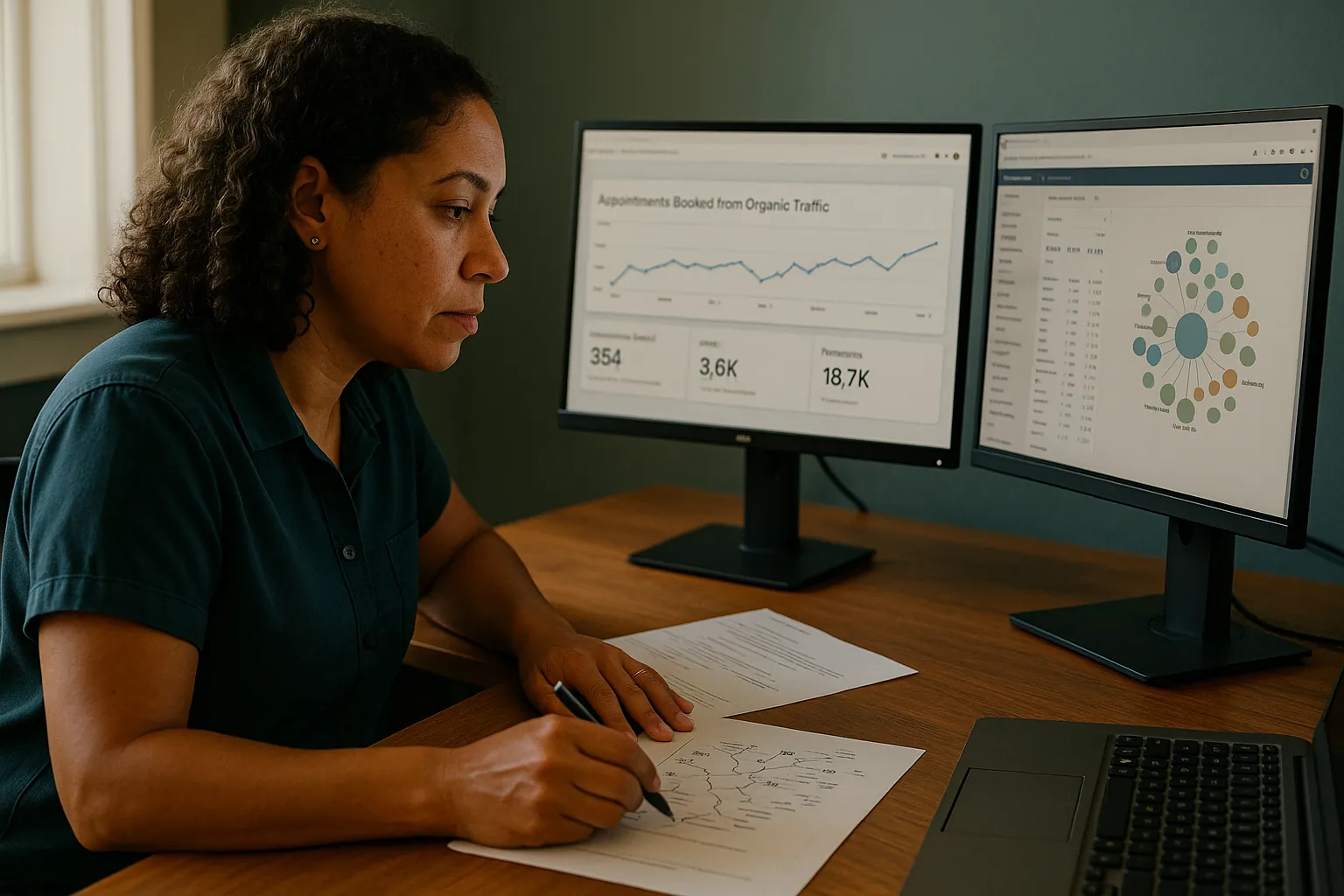
The businesses that benefit most from SEO understand this compounding pattern. They do not judge success only by week-to-week traffic swings. They watch growth in ranked keywords, impressions, click-through rate, non-branded traffic, and conversions from organic sessions. Those earlier indicators often improve before total traffic makes a dramatic move.
The foundation is usually technical, even when the problem looks like content
When people hear SEO, they often picture blog posts and keywords. Content matters, but a surprising amount of organic traffic growth depends on technical work that visitors never notice directly. Search engines need to crawl pages efficiently, understand site structure, and trust that important pages are accessible, canonicalized correctly, mobile friendly, and worth indexing.
A common example is the bloated site that has hundreds or thousands of weak URLs generated by filters, tags, duplicate product variations, or outdated CMS behavior. On the surface, the company might think it has a content problem because rankings are poor. Underneath, crawl budget is being wasted, equity is diluted, and the most valuable pages are competing with near-duplicates. In cases like that, SEO Services increase traffic by simplifying the site before adding anything new.
The same is true for speed and mobile usability. Page speed alone will not rescue a weak website, but a slow, unstable mobile experience can suppress performance, especially for competitive queries where search engines have many alternatives to choose from. I have seen sites improve their organic performance simply by reducing template clutter, compressing oversized media, and cleaning up JavaScript that delayed content rendering. Those changes did not produce a dramatic overnight spike. What they did produce was a stronger platform, one that allowed later content work to perform better.
Technical fixes can also protect existing traffic. A poorly handled redesign, migration, or URL restructuring can erase years of ranking equity. Solid SEO Services often earn their value by preventing losses that never show up in a neat growth chart. That kind of prevention is easy to underrate until a business watches a category page disappear from the top results and sees revenue drop with it.
Content earns traffic when it matches search intent closely
Once the technical base is stable, content usually becomes the clearest lever for long-term organic growth. Not just more content, but better-targeted content. Search engines have become very good at distinguishing between pages that merely mention a topic and pages that satisfy the user behind the query.
That matters because not every keyword deserves the same page type. A person searching for "best payroll software for small construction firms" expects something different from someone searching "payroll software pricing" or "how to switch payroll providers." Treating those searches as interchangeable leads to bland pages that rank poorly because they do not fully answer any one need.
Effective SEO Services map topics to intent. Sometimes that means building service pages that answer buying questions with more depth and credibility. Sometimes it means creating resource content that captures earlier-stage demand and introduces the brand before the purchase decision. Sometimes it means merging thin, overlapping pages into one stronger asset instead of adding to the clutter.
A client once had nearly a dozen short articles aimed at slight variations of the same topic. Each one had a few impressions and almost no traffic. Consolidating them into a single well-structured guide, then tightening internal links around it, produced a measurable lift within a few months. Total page count went down. Organic traffic went up. That trade-off surprises teams that still assume search growth is mainly a publishing volume game.
The best-performing content also tends to age well because it addresses durable questions. News-based content can spike and vanish. Evergreen content, if maintained, continues attracting impressions and clicks for years. This is where SEO compounds most clearly. One strong page can keep pulling in traffic every month, then gain support from related pages published later.
Authority builds through relevance and trust, not shortcuts
Search engines do not rank pages based only on what those pages say about themselves. They also look for external signs of trust and authority. In practical SEO Services terms, that often means earning quality links, brand mentions, citations, and signals that the business is recognized within its market.
This is one area where expectations need careful management. Low-quality link schemes can create short-term movement, but they rarely age well. Sustainable SEO Services focus on assets and relationships that make links more likely to happen naturally or through thoughtful outreach. Original research, local partnerships, useful tools, expert commentary, strong service pages, and quotable educational resources often do more for authority than mass email campaigns ever will.
For local businesses, authority may come partly from consistent citations, a well-managed Google Business Profile, and strong review acquisition practices. For B2B firms, it may come from thought leadership content, industry directories, digital PR, and product comparison pages that others cite. For ecommerce brands, it may come from category pages, buying guides, and brand mentions from relevant publications.
Authority also tends to increase unevenly. One well-earned mention from a respected industry site can have more value than dozens of low-quality placements. That unevenness is why experienced practitioners do not overpromise link targets without context. The work is strategic, not mechanical.
Internal linking quietly amplifies everything else
Internal linking is not the glamorous part of SEO, but it often produces some of the cleanest wins. When a site grows over time, content and commercial pages can become isolated. Good pages exist, but they are hard for search engines and users to discover in a sensible path.
Strategic internal links solve several problems at once. They help search engines understand which pages matter most. They distribute authority from stronger pages to newer or more specific ones. They guide users toward related content, product pages, or service pages that move them deeper into the funnel.
This is especially important on sites that publish regularly. Without an intentional internal linking system, new articles appear, gather a few visits, and then fade into obscurity in the archive. With a stronger structure, older pages support newer ones, topic hubs become clearer, and the site starts behaving like a connected resource rather than a stack of isolated documents.
I have seen internal linking changes improve crawl activity, rankings, and assisted conversions without any new backlinks or major rewrites. It is not flashy work, but it is exactly the kind of operational improvement that makes SEO Services effective over time.
User behavior shapes results more than many teams expect
Search engines want to rank pages that satisfy users. While no reputable SEO professional should pretend to know every ranking signal or assign neat percentages to them, user experience matters in obvious ways. If visitors land on a page and immediately realize it is slow, vague, hard to navigate, or mismatched to their intent, the page is unlikely to perform as well in the long run as a better alternative.
This does not mean chasing vanity engagement metrics. It means designing pages that help people complete the task they came to accomplish. On a service page, that might involve clearer proof points, stronger local signals, better FAQs, and a less cluttered layout. On an informational page, it might mean more direct answers near the top, stronger examples, or cleaner formatting.
The practical effect is that SEO Services often overlap with conversion optimization, UX, and content strategy. That overlap is healthy. More organic traffic has limited value if the wrong visitors are arriving or if qualified visitors are confused when they get there. Some of the best organic growth comes from making pages both more searchable and more useful, rather than treating those as separate goals.
Time is not just a waiting period, it is part of the mechanism
One reason SEO works over time is that search performance reflects accumulated trust. New pages can rank quickly in some situations, especially on strong domains or for underserved queries. More often, pages need time to be crawled, indexed, tested in the results, compared against competing content, and reinforced by engagement, links, and internal site context.
Businesses sometimes mistake this for inactivity. They publish content, fix technical issues, and expect a visible lift within a few weeks. Sometimes that happens. More often, there is a lag. Then several changes begin to show impact at once. A category page improves after supporting content is published. A service page rises after technical cleanup makes crawling more efficient. A blog post starts ranking after it earns a few relevant mentions and internal links.
This delayed effect is one reason mature SEO programs become more efficient. Early months often involve repairs and foundational work. Later months build on a cleaner system. The site has stronger topical coverage, better architecture, and more historical signals supporting its pages. That does not make growth effortless. It does make each additional improvement more likely to stick.
What steady organic growth usually looks like in practice
Traffic growth from SEO Services often follows a pattern that looks modest until you zoom out. Month one may focus on auditing and fixing structural issues. Months two through four might involve content revisions, new page development, and indexation cleanup. Somewhere between months three and six, long-tail queries begin to improve. By months six through twelve, more commercially relevant terms may start gaining ground if the site is in a moderate competition environment.
The timeline stretches in tougher markets. A national SaaS category or a medical niche will not move like a local landscaping site. Domain history, competition, content quality, engineering support, and backlink profile all affect pace. This is why blanket promises are a red flag. Honest SEO practitioners talk in scenarios, not guarantees.
Still, some outcomes are common. Non-branded impressions rise before clicks. Long-tail keyword rankings improve before head terms. A few pages start pulling most of the traffic gains, then broader sections of the site begin to participate. Leads from organic traffic may improve before total sessions do, especially if the work targets higher-intent searches.
One of the more encouraging patterns is when traffic becomes less dependent on a tiny handful of pages. A healthier site tends to attract visitors across a wider set of URLs and queries. That diversification makes the traffic base more resilient during algorithm changes or seasonal shifts.
The strongest gains come from alignment across departments
SEO fails quietly when it is treated as a silo. A strategist may identify valuable opportunities, but progress stalls if developers cannot implement fixes, writers are churning out generic content, legal teams block useful claims, or sales teams are not sharing the language customers actually use.
The best SEO Services tend to function as connective tissue. They bring search data into content planning, site architecture, brand messaging, product positioning, and even customer support insights. Search queries reveal what prospects are confused about, what comparisons they are making, what objections they have, and how they describe their own needs. That information is too useful to leave buried in ranking reports.
For example, if a B2B company learns that prospects often search SEO Services Magister Digital AI for alternatives to a dominant competitor, that insight can shape comparison pages, sales collateral, and product messaging. If a local business sees rising searches around financing or emergency service hours, that can influence page content, FAQ structure, and call handling. Organic traffic grows faster when the website reflects the market's real questions rather than internal assumptions.
Measurement matters, but the right metrics matter more
The temptation with SEO reporting is to focus on whatever looks dramatic. Rankings can be dramatic. Traffic can be dramatic. Neither tells the whole story on its own.
A page ranking fifth for a highly relevant commercial term may be more valuable than three blog posts ranking first for loosely related informational queries. Likewise, a month with flat traffic but improved conversion rate and stronger lead quality may represent meaningful progress.
Useful reporting usually keeps a close eye on a few measures:
- Non-branded organic traffic, because it shows reach beyond existing brand awareness
- Impressions and click-through rate, because they reveal visibility and search result appeal
- Rankings for commercially relevant queries, because not all keywords carry equal business value
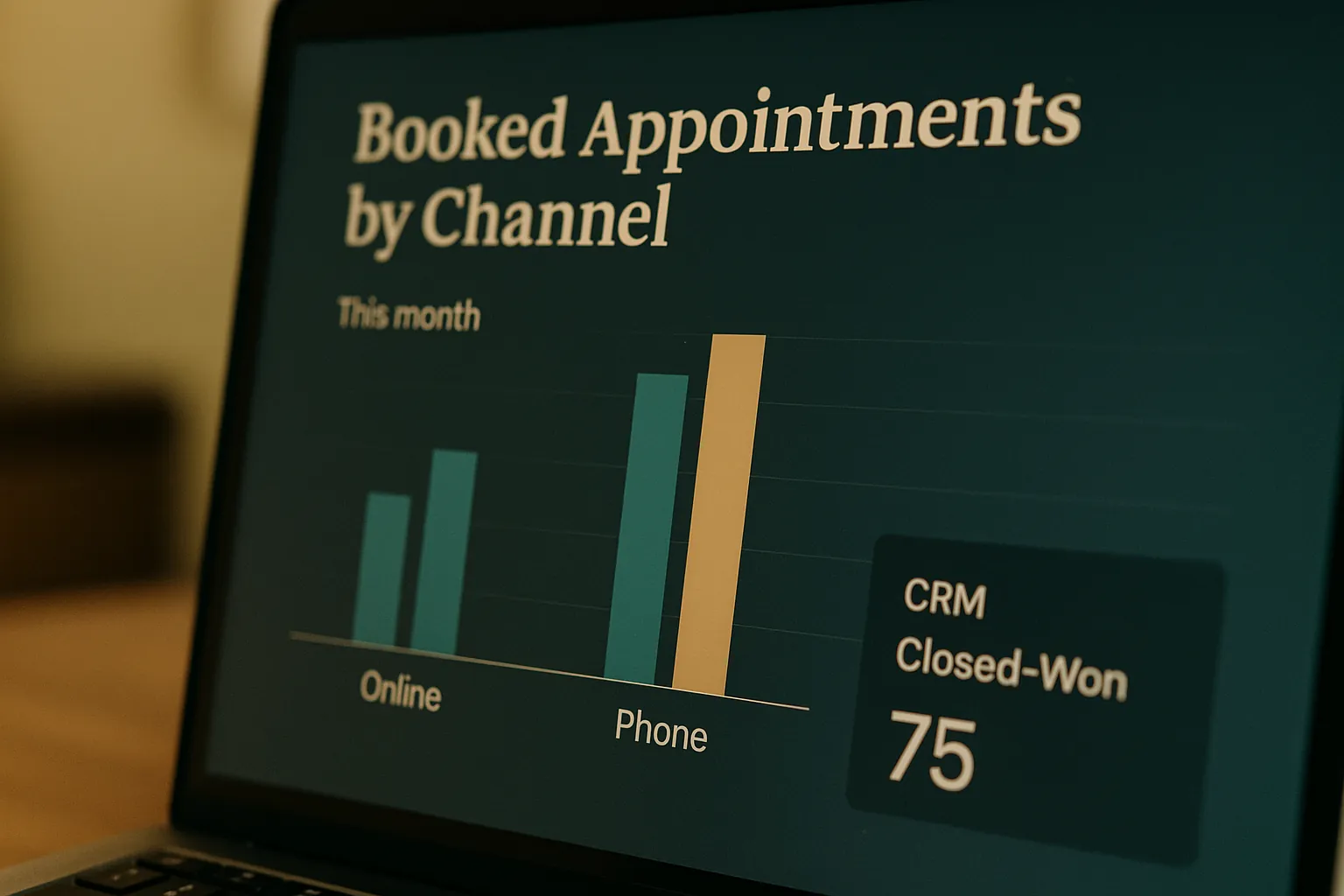
- Conversions and assisted conversions from organic sessions, because traffic without outcomes is easy to overrate
- Landing page performance over time, because growth often happens at the page level before it shows up sitewide
Those metrics are most useful when paired with context. A drop in traffic may be harmless if low-quality pages were removed. A ranking jump may not matter if the keyword brings unqualified visitors. Strong SEO Services help businesses read the story behind the numbers rather than react to every fluctuation.
Common reasons organic traffic plateaus
Even well-run campaigns hit plateaus. Sometimes the site has harvested the easier gains and is now competing for tougher terms. Sometimes content production continues, but quality drifts. Sometimes technical debt returns after a redesign or a plugin update. Sometimes a business has simply reached the limit of demand in a small niche and needs expansion into adjacent topics or geographies.
Another common issue is intent mismatch. A site may rank, attract clicks, and still fail to build momentum because the pages are not satisfying what users need. Search engines notice when alternatives perform better. Refreshing content, clarifying page purpose, or creating a more appropriate page type can restart growth more effectively than publishing more of the same.
Plateaus can also come from underinvestment. Many companies do the first round of SEO work, enjoy a lift, and then treat the channel as finished. Competitors keep improving. Search behavior changes. Technology changes. Content ages. Organic traffic tends to reward consistency more than bursts of enthusiasm.
Why the payoff can outlast the campaign itself
One of the most attractive features of SEO Services is that the benefits often persist after a particular sprint or retainer ends. If a site has earned strong rankings with valuable pages, clean architecture, and credible authority signals, it can continue attracting traffic long after those assets are built.
That does not mean SEO is a set-it-and-forget-it channel. Rankings can slip, competitors can overtake, and outdated content can decay. Still, the residual value is real. A well-optimized guide can drive traffic for years. A properly structured service section can keep generating leads every month. A corrected technical framework can support future content far more efficiently than the broken version it replaced.
That is the heart of how SEO Services increase organic traffic over time. They do not manufacture demand. They help a business become easier to find, easier to understand, and easier to trust. They build an asset base inside the website itself, one improvement reinforcing the next. Month by month, that work can turn a quiet site into a dependable source of qualified visits, leads, and revenue.
For businesses willing to think beyond immediate spikes, that is where SEO becomes less of a marketing tactic and more of a long-term growth system.
Magister Digital AI
1135 Garnet Ave #13, San Diego, CA 92109
+16193300953
FAQ About SEO Services
What do SEO services include?
SEO services can include technical site reviews, keyword and search-intent research, content improvement, internal linking, local optimization, structured data, and performance reporting. The exact scope should reflect the business, market, and goals.
How long does SEO take to show results?
Timing varies with the website's current condition, competition, and scope. Technical improvements may show movement sooner, while competitive content and authority work often require several months of consistent effort.
Do SEO services include local SEO?
They can. Local SEO commonly covers Google Business Profile optimization, accurate business citations, local schema, reviews, and service-area or location content when those elements are relevant.
How should SEO performance be measured?
Useful measures include qualified organic traffic, calls, form submissions, booked appointments, revenue influence, and visibility for searches that matter to the business. Rankings alone do not show the full outcome.